Episode 26
Using Psychedelics to Enhance your Life
In this episode of the Aprica podcast, we delve into the transformative potential of psychedelics for mental health. Julie Cyvonne shares her personal journey from being a lawyer to becoming a coach and psychedelic facilitator.
The conversation explores the history and legality of psychedelics, their non-addictive nature and the benefits they offer, including breaking addiction and enhancing mental wellness. We discuss integration after psychedelic experiences and the differences between microdosing and macrodosing.
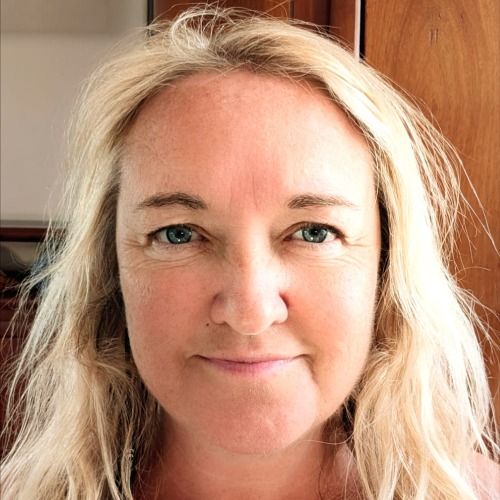
With Julie Cyvonne - Julie Cyvonne is a psychedelic facilitator, breathwork practitioner, certified coach, and former lawyer who helps high-achieving women heal burnout and reconnect with themselves. She bridges the science of micro- and macro-dosing with integration practices to create grounded, lasting transformation. - Julie's Website - @juliecyvonne on Instagram - Julie on YouTube
And your host:
Eleanor Marker - Therapist and life coach - eleanormarker.com
Transcript
Welcome to the Aprica podcast because a little advice goes a long way.
2
:Welcome to another episode of the Aprica podcast, where every single week we will give you
a little piece of life advice for you to take away and try out.
3
:Today I'm joined by Julie Cyvonne and we are going to be talking about the use of
psychedelics to enhance your life.
4
:and a little caveat.
5
:If you can hear a dog barking in the background, that is my puppy going bonkers.
6
:So apologies in advance if anyone can hear my puppy in the background.
7
:Julie, thank you so much for coming on the podcast today.
8
:Do tell us a little bit.
9
:about yourself then and how you got into this, what feels to me like quite a niche kind of
area.
10
:It's so funny.
11
:I thought you could maybe hear my dog.
12
:My dog might also be going bonkers.
13
:So if someone hears that, who knows?
14
:Yeah, I hope they have good time.
15
:Yeah, I used to be an attorney.
16
:I used to be a lawyer and I practiced for three years.
17
:uh But I had always really struggled with my mental health.
18
:My dad died when I was little.
19
:And mental health wasn't a conversation we had in our house.
20
:I always believe and like to keep at the forefront that I
21
:I want to see people as doing the best they can with what they have at all times.
22
:And I'm sure there are many reasons why she thought maybe I wouldn't need or that mental
health support wasn't like.
23
:the appropriate thing at that time.
24
:But regardless, I didn't receive any.
25
:And I also didn't have a conversation about mental health in my house, right?
26
:Like I didn't know what anxiety or depression really meant.
27
:I actually really thought if you were not contemplating ending your own life that you
could not be depressed.
28
:I really had like conflated those two things.
29
:uh Just like ignorance, right?
30
:Never having talked about it.
31
:I also didn't know anything about panic attacks or dissociation, but I had been
dissociating now that I understand what that is.
32
:since pretty much my dad died.
33
:And it was very intense and scary.
34
:ah And I had panic attacks starting in college, but ah you can only kind of hold things
together with tape for so long before it's just like the dam is bursting.
35
:And that's really how I felt.
36
:And it had been 20 years of just holding it together, trying to be the good little girl,
trying to succeed and gain approval through accomplishments and being top of my class and
37
:then going to law school.
38
:ah
39
:And the pandemic hit and it's interesting.
40
:I think about life now or God or higher order consciousness as sort of water in a river.
41
:And we're all in the river with the water and the water wants us to, it's trying to take
us down the tributary that's going to lead to our highest evolution or path.
42
:I do believe in free will.
43
:And I also feel like we're kind of partnering with this other thing to see how good we can
get, how good it can get for us and how we can really live like in our souls calling.
44
:and the river was pushing me and I was kind of being a stubborn starfish clinging to this
like rock of I want to be a lawyer or I think I need to be a lawyer to gain approval and
45
:then the pandemic hit and the water just rushed over me and it was like okay this is not
this is not working the firm I was going to work for in California never opened because of
46
:everything with the closings um I worked for a minute for a firm that specialized in
supporting victims and
47
:Survivors of human trafficking and although that was great and obviously so rewarding like
those people need legal services more than anyone It also I just couldn't deny that I
48
:didn't like it And uh so I pursued coaching and a coaching certification because it very
intuitively came up on a podcast and I thought yeah This sounds good.
49
:I like this and from coaching and kind of taking that sharp left turn I entered the world
of psychedelics and originally it was just for me.
50
:It was just for my own mental health, but it
51
:The response was so overwhelming to people.
52
:Can you help me?
53
:I want to do this teach me how to do it too that it felt like the river was you know
guiding me toward that path and I said, okay and leaned in and here we are like four years
54
:later
55
:That's amazing.
56
:That's quite a journey from good girl pursuing all the right paths, know, right in
inverted commas to becoming a coach and a kind of psychedelic facilitator.
57
:That's an amazing sort of segue off.
58
:So talk to me then and talk to our global audience then about psychedelics.
59
:So bear in mind that obviously people will be in lots of different countries.
60
:Now,
61
:In my head, as somebody in the UK, psychedelics means basically LSD, tabs of acid, illegal
drugs.
62
:That's where my brain immediately goes to when I hear psychedelics.
63
:So talk to us about what are psychedelics and how does one get them?
64
:What's the sort of legality around them?
65
:So a psychedelic is really anything that's changing your perception of reality and so that
can be like on a larger scale like a whole you know trip a journey of thinking the wall is
66
:melting or the colors are not there that are there that are not usually there or you know
things don't look as they do in a normal state of consciousness psychedelic is anything
67
:that produces a non-ordinary state of conscious consciousness and no SC m
68
:So that is yes, Salo Simon aka magic mushrooms that is acid, which is LSD.
69
:Ayahuasca is one that we hear about a lot.
70
:And in terms of kind of the history and legality, I really am only informed I'm going to
say I'm very ignorant on matters abroad.
71
:But it was originally brought here so Salo Simon specifically from Oaxaca, a state in
Mexico, where this man went and
72
:Really, it's a very sad story of colonialism where he came to her village and said, well,
you help me.
73
:And she took him on her cultural, right, and within her indigenous practice, her
experience as a medicine woman.
74
:And then he went home, wrote about it, and just tourists flooded to this village.
75
:Everyone in the village hated her.
76
:And it was actually a really sad story.
77
:And she died not in good regard with her community because of opening up this work to.
78
:this white man who used her in classic, you know, US white man fashion.
79
:But from that experience, we started researching with psilocybin in the 50s and the 60s.
80
:And there was a lot of research coming up about how this treatment can be used for
addiction, specifically alcoholism.
81
:So that was where the research was.
82
:It was really cool.
83
:And then Albert Hoffman, I think in Switzerland, accidentally synthesized this fungus
ergot and got LSD.
84
:Um, he had, you know, his own experience with that, but the CIA picked up LSD and thought,
okay, maybe we can use this as a truth serum.
85
:So there's a, uh, well known, um, CIA experiment operative that, is now unredacted and
like people can go and read about it because the government has made a public knowledge,
86
:but the CIA was dosing people unknowingly in San Francisco with LSD.
87
:Um, and they thought they were going to use it as a truth serum.
88
:It was like an agent of war on their
89
:uh enemy combatants to get secrets from them, right?
90
:And what the CIA actually found is when people took LSD, they really opened up their
consciousness and they started asking more questions.
91
:And then we got a lot of blowback.
92
:The government did from like Korea, from Vietnam and our involvement there.
93
:And that's when they decided, okay, you know what, actually we're gonna cut off funding
for research for all psychedelics and we're gonna make psilocybin and LSD is schedule one
94
:substance, which in the United States is like our most rigorous like
95
:uh No, no substances, right?
96
:It's like cocaine heroin and then you have LSD and psilocybin which makes no sense There
are so many reasons why those things are so different But it was in response to the
97
:government not liking the way it kind of like quote-unquote woke people up So now we're
right now in the United States.
98
:We're kind of at this like jay-curve or hockey stick when it comes to uh Getting
psychedelics Legalized and decriminalized so certain states it's like already there in
99
:Washington DC.
100
:In fact, it is as well
101
:But we're in a really big shifting landscape.
102
:So I work with three companies outside of in California that ship to all 50 states and
Canada that are able to provide capsules that contain just ground up mushrooms, such as
103
:pure psilocybin.
104
:It's pre-measured in the microdosing form, but it is like it's a shifting landscape.
105
:And I think that's the case when I dabble in my very quick, like brief little news blurbs
globally that it's shifting as well.
106
:That's so interesting.
107
:my idea of psychedelics is actually right.
108
:So it's basically things like magic mushrooms and LSD and things like that.
109
:So how do you then take these psychedelics in a way that ensures that your health is safe?
110
:Yeah, so uh three big things pop up when you ask that question.
111
:One is this idea of set and setting.
112
:So set and setting is a term in the psychedelic facilitation world.
113
:It's a phrase that refers to your mindset and your environment when you partake with
anything that is a psychedelic at the macro or the micro level.
114
:And what research says is if you control for those two things, like if you enter it with a
mindset of like, even being intentional with it, I'm here for the purpose of healing, like
115
:I'm open to.
116
:what is, I feel like I'm safe wherever I'm at, right?
117
:That's why I really don't, I strongly recommend against people taking psychedelics, in
these more recreational settings, not from a POV of judgment.
118
:I have absolutely no judgment towards people.
119
:I've had recreational experiences, but I know a lot of those types people have already
been drinking, right?
120
:Oof, I really would not drink and take a psychedelics.
121
:That one is, I don't have a judgment against it, but I do kind of think I'm quote unquote
right about that one.
122
:But when you're in an overwhelming setting, like at a festival, you don't know everyone,
there's a lot of people, there's noise, like it's very easy to feel unsafe.
123
:If you feel unsafe, either in your surroundings or even mentally, there's a conversation
of I'm not safe, you're not going to have a good experience.
124
:And so when we control for set and setting, the research tells us that your likelihood of
having a bad trip or a bad experience essentially goes away.
125
:So control for set and setting, be intentional.
126
:That's a big one that I always say, right?
127
:Have a clear intention.
128
:What am I doing this for?
129
:What am I hoping to get out of it?
130
:How can I set myself up for success?
131
:And then make sure that you integrate, right?
132
:So a lot of people are like, I just need to take the capsule and then I'm gonna feel
better and I'll just move along with my life.
133
:You're gonna feel better in the moment for sure, but if you're not taking the magic of the
mushrooms and embodying whatever wisdom, um whatever feeling that it gives you access to
134
:in the day to day after that experience, then you're not gonna change your life.
135
:And ultimately I want long-term sustainable change, not like I had a cool experience.
136
:When it comes to safety, it's about the state that you enter into it, your mental state
when you enter into it, and then the intention that you set for that experience.
137
:And that makes sense because obviously it's a mind-altering drug and so your mind state is
gonna make a difference when you're in it and when you enter into it.
138
:Before we move on to the benefits and why people might take it, I just want to make sure
we're sort of ticking off the things that people listening might be wanting to ask.
139
:So what about addiction?
140
:Is there any concerns around addiction to these?
141
:Yeah, so I just want to circle back to when I briefly touched on the research in the
beginning of the 50s and the 60s.
142
:It was for addiction treatment.
143
:So that's a big reason why I believe that psychedelics are misclassified as a schedule one
substance is because they're the only one on that list that are actually non addictive.
144
:So in studies with rats, you know, rats will go back to cocaine, they'll go back to
heroin, they'll go back to nicotine uh over and over again to try to get that feeling
145
:right.
146
:Rats will not.
147
:go back to psychedelics, will not go back to psilocybin, they will not go back to LSD, and
in fact, these substances have been shown to help us break addiction because they promote
148
:neuromodulation, neuroplasticity, just like a connection of our brain m in new ways, a
heightened number of connections, and helping us break those patterns, thoughts, behaviors
149
:that are not serving us, right?
150
:So addiction at the end of the day is like a repetition of a pattern, right?
151
:It's like I can't I feel like I can't stop myself from needing a drink when I'm stressed
or whatever the environmental trigger is.
152
:But with psychedelics you get a new chance.
153
:It's like we're breaking that association.
154
:We're wiping the slate cleaning.
155
:You have the opportunity then to engage in a different way.
156
:So one of the benefits of psychedelics is that it gives you a different perspective on
something.
157
:So your brain might see something, your subconscious mind might be accessed, it might see
something in a different way.
158
:So what are the other benefits?
159
:What are the other reasons why we should, in this world where we're constantly now trying
to avoid putting in chemicals and artificially processing, what are the reasons why we
160
:might actually do that?
161
:So it's a subconscious connection for sure, but it's also very much like we can see it on
an fMRI scan.
162
:Like our brain is communicating in new ways.
163
:Different parts of our brain are lighting up with new blood flow.
164
:So it is a very like demonstrable thing that we can see happening at a physical level.
165
:em But yeah, I mean, people come to this work because they don't want to be on certain
prescriptions anymore.
166
:They feel like.
167
:You know, I never really wanted to be on Prozac, but they put me on Prozac for my
depression, and now it's been 10 years, and I don't like the side effects.
168
:I don't want to be on this for the rest of my life.
169
:So a lot of people come to this work to get off SSRIs, SNRIs, and then with the rise in
like stimulants, a lot of people want to get off of Adderall, Vivans, even non-stimulant
170
:ADHD medication like Stratera, which every medication has side effects, right?
171
:And most of the side effects are like miles long.
172
:So Stratera, even though it's a non-stimulant ADHD medication,
173
:can artificially raise your resting heart rate by a lot, which is a not great long-term
indicator of health.
174
:So getting off of unwanted medications is a big one.
175
:I would say a lot of people come to this work, particularly not just even for addiction,
but just to change the way they're consuming, perhaps, alcohol.
176
:Like, if I feel like I have to have three glasses of wine to go on this date with this guy
or attend a networking event, like.
177
:that's not helping me be clear, be present, be, you know, sort of in my highest state of
thinking.
178
:So maybe I'll microdose instead.
179
:I've had people stop smoking, doing other drugs and substances as a result of microdosing.
180
:uh One kind of weird unexpected benefit that I've heard a lot in my years is like I
eventually start sleeping better.
181
:I would say that's like after a round or two, it's not like the most immediate effect.
182
:But then also because it's
183
:it's changing the way our brain is communicating and activated.
184
:There's also the opportunity to change like, like you said, eating habits, right?
185
:So I don't want to reach for the Cheeto Puffs.
186
:Maybe instead I will have an apple.
187
:And I know that's kind of like a uh silly example, perhaps, but it's true.
188
:Like, especially after a larger journey, I find that my palate really does change.
189
:And it shifts in ways and it kind of directs me toward
190
:food that is probably more nourishing than other ones.
191
:Why would it do that, do you think?
192
:That's one thing that I don't it's kind of like the science can't explain why we see
different things like what's happening specifically with our vision that produces these
193
:like Things that are quote-unquote not there um But I think it is It's to me.
194
:It's like a reset, right?
195
:It's like a control alt delete.
196
:I kind of this isn't my analogy This is Paul Stamos who's like was godfather of mushrooms,
right psychedelic and not but he says that it's like shaking the snow globe So you get a
197
:fresh layer of snow
198
:And instead of having these trails These patterns that are well worn in our brain.
199
:We have the opportunity to just reset and when we think about it You know, one I don't
think well actually no no human comes out of the womb like thinking They're they're
200
:craving so much sugar or salt or whatever, right?
201
:Like you see it in babies if you delay giving a baby Sugar for a while.
202
:It's not like it's gonna ask for the cookie because it doesn't know that the cookie is
whatever so
203
:if we can give ourselves that reset, then we're not craving these things that are
artificial.
204
:Our human body knows that we could get uh sustenance and even a deeper primal,
evolutionarily, biologically advantageous way that meat is going to give us this iron that
205
:we need.
206
:And we can notice if we look at our cravings, what are we depleted in?
207
:Like, I really want a steak.
208
:Maybe you are really low on iron today.
209
:And so when we can kind of shift back to that like most natural state of existence before
we got inundated with such high levels of saturation of richness and sugar and salt, then
210
:we have the opportunity to kind of engage more intuitively with what our body actually
wants.
211
:That's just my hypothesis that I'm ripping off of after your question.
212
:you're ripping off from the Godfather of Mushrooms, which has got to be the best job title
ever.
213
:when you think about these psychedelics, and you take a psychedelic and your subconscious
goes like, and your conscious mind and your subconscious mind will go off on this amazing
214
:trip and explore these bits of the brain and start lighting up that haven't lit up before,
can you remember what you experienced?
215
:And do you then take what you experienced and
216
:and sort of like apply it almost apply that information that new perspective into your
everyday life or is it or can you not remember but something shifts more at an intuitive
217
:or subconscious level?
218
:Wow, I've never been asked that question, but I really like it.
219
:Yes, let's jam out about that.
220
:So when you go on a trip, definitely can remember.
221
:um It's not, I think people, I think there's a misconception that you're gonna go into
like a fugue state and black out.
222
:It's like, what happened?
223
:You I woke up six hours later and I had no idea what happened to me.
224
:That's not it.
225
:Like you are very um aware.
226
:to a certain degree like you're you might not be able to feel like you can you know, run a
marathon but you're there you're present.
227
:So you can definitely remember a big part of my retreats and a big part of any plant
medicine experience with a facilitator not in like a research lab basically like anyone
228
:out here leading ceremonies and retreats.
229
:I would say I've never seen an experience that didn't have this one component which is
like a share circle.
230
:So after the experience,
231
:Everyone kind of telling the group what came up for them and for a lot of people and I
would say myself included is kind like a movie or it's almost like a play where you have
232
:separate sort of acts like act one this is what came up for me ah and then yeah to your to
your point of like what do you maybe it's just unconsciously plays out in your real life
233
:afterwards, I would say
234
:Everyone wants to have their journal by them during an experience and I've never seen
someone be able to use their journal.
235
:So I'm always like, you can have it there if you want.
236
:If you use it, I'll be really impressed.
237
:But no, I would say actually that's what's missing in most of the psychedelic space and
that's why I'm so adamant about this piece, but integration is everything.
238
:So you might have a very strong feeling in the journey of, what's a good one?
239
:I need to end my relationship.
240
:right, like this relationship isn't serving me and you have a lot of conviction in the
moment and it's very clear.
241
:But then you know, you go out and this is true of anything is through therapy is true of
coaching is like you have this big breakthrough in the in the session and then you come
242
:back a week later and you're like, how did the conversation go and she's like, I booked a
trip to Mexico with them we leave in two weeks and you're thinking what do you mean?
243
:Yeah, so I mean, exactly like integration to me is the missing sauce and sort of
everything.
244
:So we have a very clear integration exercise.
245
:actually just recorded a podcast about my integration exercise, about how we're taking
what came up in the journey and implementing it in your real life.
246
:And then my integration and my retreats is a month of support afterwards.
247
:So we have a group chat where people are checking in like, hey, did you hit your
commitment?
248
:Like if not, what got in the way?
249
:And we have three calls afterward to make sure that the integration is actually
integrating.
250
:Yeah, and I guess that's where the coaching bit of your work comes in, right?
251
:The kind of follow through.
252
:I'd like to pause the podcast for a moment to thank you for listening.
253
:I'd love to hear from you, so please send me a comment under this podcast or on our
Instagram channel, Aprica Podcast.
254
:Like, subscribe, download and share with family and friends.
255
:And thank you for taking the time to listen to the show.
256
:You mentioned there about people who maybe shift from or want to shift from
antidepressants, ADHD meds, things like that.
257
:And they want to, they want a different intervention.
258
:Is it that psychedelics is a replacement for those?
259
:So you would maybe take psychedelics as opposed to taking the ADHD meds, or is it that the
psychedelics is more like a one-off or a three or four off that then shifting such that
260
:you actually don't need any other kind of medical intervention, including psychedelics?
261
:say both.
262
:goal is always to create long-term sustainable raising of your baseline, right, to
increase your overall homeostasis so that you don't need it anymore.
263
:But so I kind of think about these two things in different cams, like thinking about
SSRIs.
264
:uh You know, what we found is that
265
:Long-term SSRI use and this isn't you know, my pain This isn't the research does alter
someone's brain chemistry and your brain's ability to produce serotonin on its own So
266
:getting off can be damn near impossible.
267
:It can be one of the hardest things because your brain is no longer Making even the level
it made before but also we don't know what effects serotonin has on the m
268
:Actual like mechanisms of depression, but we do know it messes with your brain chemistry
SSRIs mess with your brain chemistry regardless So now we've messed with the serotonin.
269
:We don't actually know what role serotonin plays and then we actually have even more
recent research that says like SSRIs are most likely just a placebo effect in the
270
:treatment of depression.
271
:So there's
272
:not really that benefit there.
273
:We don't know what they're doing, but we know that we've messed up our brain chemistry.
274
:But what's interesting about psilocybin or psilocin, the active compound in psilocybin and
SSRIs or serotonin, is that they have the same like chemical structure.
275
:They're both tryptophan.
276
:They're similar chemical structure.
277
:They're not the exact same molecule, right?
278
:So they both bind at the same receptor in our brain, the 5-HT2A receptor.
279
:And so when we use microdosing as a tool to help someone safely titrate off of unwanted
SSRI, we're kind of replacing the bond there, right?
280
:And with long-term use and honestly with more functional mushrooms.
281
:So a functional mushroom is anything like reishi, portisep, lion's mane.
282
:We can actually repair some of those receptors so that we can get like your balance back
neurotransmitter wise in your brain.
283
:So that's how I think about,
284
:SSRI using getting off that and then eventually my goal is to help someone's brain
restabilize through Maybe a little bit longer term microdosing use and then get to a point
285
:where they just don't need anything anymore For the ADHD camp right getting off of
Adderall or Vyvan's um That is probably a more regular um Tool although there are
286
:certainly certainly to strengthen like your uh
287
:directed focus and attention um so that you don't feel like you have to microdose
continually either.
288
:uh in both camps, the goal is to get off of everything in the long term, but the path is
probably a little bit longer in terms of being on microdoses, but you also can't microdose
289
:like every single day all the time because it loses its effectiveness.
290
:So you have to follow a protocol for a set amount of days, take rest periods and go from
there.
291
:Okay, and for anyone who's listening, and I'm sure you're all sensible enough to know
this, but any kind of prescribed medication, particularly things like antidepressants,
292
:it's really important that you don't come off them without support.
293
:You know, whether that's someone like Julie or someone like me or your GP, your doctor,
your psychiatrist, whatever.
294
:So I just want to throw that one in there so that people listening aren't just chucking
their SSRIs down the toilet, right?
295
:No, definitely don't do that.
296
:just heard a really scary story.
297
:Well, first of all, don't definitely don't go cold turkey.
298
:It's not something that you can safely do cold turkey.
299
:But I had a really scary story of a client who she's working with me to safely get off of
her SSR as her Lexapro.
300
:um But she had a friend who because the US healthcare system is so messed up, wasn't able
to like get her next prescription.
301
:So she had to get off her SSRI within two weeks.
302
:And then she started hearing voices.
303
:because she didn't have, it was way too quick, she didn't have the support, but she knew,
she wasn't in a state of psychosis, she knew the voice wasn't real, and so she goes to the
304
:doctor in an emergency clinic and says, hey, I'm hearing voices, can you help me?
305
:And they tell her, this just almost made me wanna throw up.
306
:They said, we aren't gonna give you anything, so we don't wanna ma-
307
:your symptoms and I'm like what do think the lexapro was doing like that wasn't healing
her anxiety and depression so you don't you want to mask it on the front end you don't
308
:want to mask it on the back end and just ended up being a really really sad story so do
not come off them like don't throw them out and then honestly I would say I don't know how
309
:it is in other places but in the United States you know my clients do tell me what their
doctors like the plan their doctors give them and it's always like a month long
310
:I'm like a month is not enough time to safely get off of something.
311
:You need way more time and it's not just like cut your dose in half.
312
:I think that's so irresponsible.
313
:honestly, give yourself even more cushion than whatever a doctor tells you.
314
:Yeah, and what I hear from you there is that coming off whatever you're on and then
getting on to the psychedelics is a journey.
315
:It's like a process.
316
:talk to us then very lastly about microdosing versus macrodosing.
317
:What is that all about?
318
:And what do need to know about it?
319
:think macrodosing is what most people think about when they think about psychedelics.
320
:like, I'm going to see a caterpillar smoking hookah.
321
:like, you know, my face is going to melt.
322
:it's really extreme things, right?
323
:A macrodose is essentially just a full dose of whatever substance.
324
:And it looks different, know, psilocybin versus LSD, the measurements are different.
325
:But it's like whatever you could consider a dose that's like really going to produce some
sort of hallucination, auditory visual.
326
:Whatever, but you do, understand, like you still understand, hey, this is not real, I'm
having an experience.
327
:Like you don't lose that, kind of like I was talking about with the woman hearing voices,
right?
328
:She wasn't so immersed in the experience of hearing voices that she had lost her grip on
reality.
329
:You maintain the understanding that like, this is a journey.
330
:And then sometimes you're like, can I be done?
331
:uh But microdosing is taking a sub perceptual amount.
332
:usually like a tenth to a twentieth of a quote unquote full dose, then you're not gonna
see, it's sub perceptual, so you're not gonna change how things look or hear or really
333
:feel, but you're still gonna get the positive benefits in your brain, meaning increased
neuroplasticity, the increase in entropy, of quieting down of parts in your brain that
334
:like chatter and are not supportive, so.
335
:When people are like, why would you take a microdose if you're not gonna see anything?
336
:It's like, I don't want to see anything.
337
:I wanna go about my everyday life.
338
:I wanna be able to drive a car, raise my kids, go to work.
339
:But I want to help my brain heal.
340
:I wanna help my brain reprogram itself to work for me instead of against me.
341
:And very lastly, are psychedelics then a stimulant?
342
:So it really depends on the person.
343
:So a full dose of psilocybin will keep you awake, right?
344
:Like you're not, unless someone's very, very worn out, they're not gonna fall asleep.
345
:um But it really kind of depends person to person.
346
:So I would say when I microdose, it does have a slight stimulant effect.
347
:It's not jittery like coffee or Adderall, Red Bull, whatever, but I do feel like more
focused, energized, that'll do.
348
:But for people who have ADHD,
349
:It actually can have a different effect of like, I feel calm.
350
:Like I can be here now.
351
:I can be relaxed.
352
:So it depends on your body.
353
:But yeah, I mean, if you're gonna take a full dose of LSD, psilocybin, you're not gonna
fall asleep on it, that's for sure.
354
:That is really such an interesting approach.
355
:It's not something I know very much about.
356
:So Julie, before we finish, what is the one piece of advice you would give to our
listeners if they were thinking about this or interested in this as a route?
357
:Well, if they're interested in this, would say honestly, do your research and you know,
there are people like me I know everywhere and find someone who you really gel with
358
:because ultimately kind of what I was saying about set and setting, if you feel like this
person, I like this person, I feel comfortable with them, you're gonna have a better
359
:experience versus like they, don't know, they kind of trigger me or they're not someone
that I would normally like gravitate toward.
360
:Well, then you're not gonna have as good of an experience but.
361
:Even if you're not, if like, you know this is not your jam, which is totally fair, I don't
think this is for everyone.
362
:I don't think anything is for everyone.
363
:But I would say almost everyone, because I don't like to make blanket statements, can
really benefit from the practice of having an intention.
364
:And even before I got into this, intentionality was a huge part of my work.
365
:And one of my first clients is now my text provider, because I have texts for my clients.
366
:And he tells me to this day, he still uses our work with intention.
367
:So basically for him, it was like, where does the day just get ahead of you?
368
:Right?
369
:Where's the day running you and you're no longer like in the driver's seat within every
task or every pivot or everything that you do, you can set an intention of how you want
370
:this experience to go for you.
371
:And he was like, I do it before I enter dinner with my friends.
372
:I do it before I eat my lunch.
373
:Like I do before I take a shower.
374
:So this one small shift of being super intentional.
375
:of like, I'm going to dinner and I wanna be connected, I wanna be present, I wanna be
loving with my friends, puts you in the driver's seat of life, or at least in the
376
:co-creation, co-pilot seat.
377
:And it can really shift a lot.
378
:So that's something that I hope everyone can take away and use.
379
:That's lovely advice.
380
:I, when people talk about manifesting, I always think that actually what you're doing
really is setting an intention for how you want the next day, week, year of your life to
381
:be.
382
:And, and then just making that happen through your own intention.
383
:Julie, thank you so much.
384
:Could you let our listeners know where they could find you if they'd like to find out more
about what you do?
385
:Yeah.
386
:So you can find me on Instagram at Julie C Y B O N N E Julie Cyvonne and you know if
you're curious about microdosing I Can't guarantee anyone not in the United States or
387
:Canada will be able to like receive Capsules, you know from me But if you're just curious
about it and you're global you can DM me the word journey and take a quick quiz to find
388
:out whether or not It's just a good fit for you generally overall uh But if you also are
just curious about sort of all these things we talked about
389
:My website is also a great place to go.
390
:It's Julie Cyvonne.
391
:So C Y B O N N E dot com.
392
:That's wonderful.
393
:Thank you so much, Julie.
394
:It's been lovely having you on the podcast today.
395
:Thank you so much.
396
:been great being here.
397
:It wasn't true.
398
:Everything's legal in the bloody Netherlands.
399
:Everything.